


“You give your life to football and then it often forgets you. Football clubs have a bad habit of taking players in, making the most of them, and then vomiting them up once they’re too old or injured […] That’s where the Professional Footballers’ Association are so wonderful, because they do not forget anyone”.
– Malcolm Macdonald
Hugo Steckelmacher takes a very analytical look at the world’s oldest professional sportsman’s association: is it needed, what is it for, and ultimately, is it doing its job? Soccerlens investigates.
.
Speaking up for the PFA
 True as it may be that the invective directed PFA-ward did not come from the most reliable source — I would like to remind readers that the purveyor of bad press, Stan Collymore, pledged just a few sunny months ago to make a quick return to the Premiership — I still feel that the issue is one worth investigating. What exactly does the PFA get up to? If many players, managers and fans, don’t seem to know the basic rules of the game of football, as attested to by Mr Ian Blanchard, I’d be willing to wager that the great majority of fans don’t quite understand the role of the PFA, either.
.
Why do footballers need a strong union?
Job uncertainty
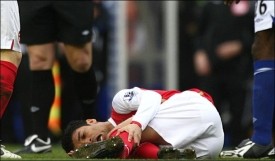
A footballer’s career is extremely short compared to the average worker, and dependent as it is upon his body, it is both constantly exposed to risk — we hope that Eduardo da Silva, for example, will be able to make a full recovery from his injury — and subject to a rapid decline after a very short “peak” period. Seeing as many players are forced to neglect their education, finding a job post-football can be nigh-on impossible, therefore leaving the impetus on football to provide for these men long after their retirement.
By the age of 21, 75% of professional footballers have given up the game. The PFA renders a massive service to unemployed footballers, working extremely hard to try to find them new clubs and hosting a comprehensive “transfer directory” of unattached players on its website; a site endorsed by Bolton manager Sam Allardyce, who was known for his ability to bring in exciting free transfers. Such a service is vital in the context of greater employment insecurity: indeed, at the end of the 2002-3 season, a record number of some 595 footballers were released from their clubs, around 20% of the total number employed in the industry.
.
Emotional strain
People tend to look at the average footballer and presume that he is emotionally vapid. The “larger than life” role of the modern day superstar can lead to such assumptions. It’s hard to take seriously the emotions of these multi-millionaire men, whose eyes stare down at you from billboards and posters everywhere. What’s more, players are, reasonably, expected to keep their emotions in check on the field.
 Off the field, however, is another kettle of fish. Being larger than life itself offers complications. You work short hours and are left to your own devices for most of the day. However, you can’t do anything too “normal”, because you will be harassed in public. Your every action is analyzed by the uncompromising media, your emotions are dismissed due to cash flow — how can a millionaire possibly be hurting emotionally? —, you perform week-in week-out under enormous amounts of pressure and are, more than most, subject to the vicissitudes of chance and randomness. Loved by millions one second, you can be hated by billions the next. Furthermore, the money you earn renders you a prominent target for gold-diggers, so that it’s difficult to know whom to trust outside of the closed circuit of football.
For the most part, you have forfeited a good education for the sake of pursuing a career in football, and as such don’t necessarily have a great deal of economic nous or common sense. Picking up a windfall at a young age brings a host of temptations, and it can be difficult to keep one’s head on the ground. You need only look at the likes of Collymore, Merson, Pennant, Barton and Best in football; Frank Bruno, Mike Tyson and Benny Lynch in boxing; Capriati in tennis; Freddie Flintoff in cricket; Ronnie O’ Sullivan in snooker; to realise that being a wealthy star, far from precluding depression/anxiety, actually harvests it. If you add to that football’s particular degenerative drinking culture, it’s easy to see why there’s a problem.
 In an interview with Mohammed Bhana, PFA Chief Executive Gordon Taylor spoke the following words, which I believe to be very apt:
“I want to caution the perception that footballers are overly fortunate, too highly paid and arrogant. I believe footballers are some of the most vulnerable people in society. […] Footballers certainly get hangers-on. They need to be careful as they are targets for newspaper stings and people wanting celebrity status […] They are never as confident as they appear to be. When I meet footballers off the pitch, even the Joey Barton’s and Roy Keane’s of this world, who have a reputation for being aggressive, are in-fact very mild mannered.”
.
The Charges
Collymore’s basic accusation is that the PFA does not offer generally offer players enough support. The former Nottingham Forest and Liverpool striker goes on to recount his own experiences with depression, which he suffered to the extent that he was nearly sectioned. Collymore equally protests against what he sees as double standards in the footballing world — with Gazza receiving preferential treatment due to his personality and reputation, with other players left to fend for themselves. Are these arguments fair?
.
Case for the defence
 First off, it is worth dealing with Collymore’s situation directly, before proceeding to a more general evaluation of the role of the PFA in English football. Against Collymore’s anti-hierarchical protest, there is relatively little to be said: in theory, a player’s status should not be taken into account when he requires aid from a trade union, which constitutionally treats all of its members as equal. On the other hand, it is perhaps naive to expect a figure such as Paul Gascoigne — a national icon, no less — to fail to attract additional media attention.
What’s more, Collymore’s other two assertions can be called into question: PFA chief Gordon Taylor has declared that full support was offered to Collymore (including going to visit the player personally after his release from Aston Villa), whilst the testimony of a number of lesser-known players is sufficient to demonstrate that unglamorous footballers are not swept under the carpet by the Footballing Union. Each case of depression is singular and Collymore’s contumely can be comprehended within the context of his own feelings of abandonment; this is not to say that his words are objectively well-founded. What’s more, the constitutional equality enjoyed by PFA members does not account for differences in personality and approach: Collymore, notoriously difficult to deal with, did not according to Taylor ask for further help, whilst Gazza, likeable and praised by his fellow players for his generosity, clearly turned to the PFA prior to being picked up.
.
The PFA — what does it do?
The English PFA is not only the most implanted trade union in the United Kingdom (with 100% density: i.e. members and at least one appointed PFA representative at each and every league club), but also the longest established professional sports association in the world; it celebrated its centenary in 2007. Its management committee contains representatives from all four divisions, including Gary Neville, Moritz Volz and Markus Hahnemann from the Premiership, alongside a few former professionals or unattached players who offer a bit of perspective to the loftier performers, and the union/its representatives give annual talks to academies across the country.
 Starting out as a dyed-in-the-wool trade union, responsible for fighting the players’ cause uniquely in terms of wages and working hours, the PFA, and more specifically, the great Billy Meredith and Jimmy Hill, were crucial in the struggle to demonstrate the precarious nature of a career in football and remove the wage cap, then set at £4 a week, moved to £12, before eventually being abolished under Hill’s stewardship in 1961. Jimmy Hill had also previously defended the Sunderland players who had been offered illegal “bonus payments” in addition to their capped salaries, and was eventually successful in having the suspension and fine with which they had been hit revoked. Another famous case saw the “Bristol City eight” defended for breach of contract after the Club had nearly folded. As Harding (1991) has shown in his history of the PFA, the footballers’ union was crucial in inverting the controlling tendencies shown by clubs with respect to players, empowering the latter and equipping them with an individual bargaining power befitting their talents (football players, especially top ones, have an outstanding scarcity value).
The PFA has a hugely important role in the future of English clubs. The organisation secured millions of pounds worth of loans to prevent the likes of Middlesbrough and Fulham in the 80’s and Crystal Palace and QPR in the 90’s from going bust, a job it continues to do with the likes of Leeds and Bournemouth, whilst Taylor was influential in the renegotiation of parachute payments for teams relegated from the Premiership following the collapse of ITV Digital, as well as paying more than £1 million worth of Bradford City wages after relegation in 2001. The association also offers regular financial advice to beleaguered clubs. Equally, the PFA’s “Meltdown” report displays the association’s dedication to finding a solution to the woes of England’s national team.
Since those days of player vs. club economic labour dispute are pretty much behind us, the PFA has had to branch out. The new-look PFA offers absolute a series of services devoted to helping footballers, both current and former, navigate the tricky waters of professional football. The PFA has its own player agency, is heavily involved in player education, and a firm supporter of community service, as well as a vocal backer of a number of charity programmes.
.
General “counselling”
 The PFA offers emotional support to footballers suffering from depression, alcoholism, drug or gambling addiction, or lack of confidence. Gordon Taylor played an important role in the recovery of the likes of Paul Merson and Tony Adams from their respective addictions, and after helping the two kick the vice, gave his full backing to Adams’ Sporting Chance Clinic for afflicted footballers. Matthew Etherington and Richard Dunne are two current Premiership footballers who have pledged their thanks to the PFA for its intervention: the former was recovering from a gambling addiction, whilst the latter was nearly sacked by Manchester City for alcohol use, before the PFA got involved.
It is worth noting, however, that as far as I can tell, the PFA does not employ any full-time counsellors/psychiatrists of its own, instead offering impartial advice and referring players to external institutions, such as the Sporting Chance Clinic. Perhaps this is an area that could be due some improvement.
.
“Rehab room”
 Contrary to what one might expect from the name “rehab room”, the rehabilitation in this case is not related to drugs or alcohol but to rehabilitation therapy following injuries. The PFA’s excellent website, www.givemefootball.com, hosts a spot called “rehab room” where players suffering from long-term injuries or breaking down incomprehensibly can write in and have their problems analysed by fully-trained specialists. “Rehab room” is a superb free resource for players of all levels, especially when such advice ordinarily comes at the cost of significant financial outlay.
.
Management agency/contract disputes
 Gordon Taylor, head of the PFA, was influential in the setting up of the PMA (Professional Management Association), offering players a stand-out, ethical and impartial option amidst what can only be described as a sea of possible representatives — England currently employs 238 FIFA licensed agents, compared to 149 in Spain, 121 in France, 115 in Germany and 46 in Italy.
The PMA itself can call on the services of 9 FIFA qualified agents who, since they receive a basic wage from the PFA and do not generally earn through negotiation, can be trusted to negotiate based on what is best for the player, rather than attempting to line their own pockets. Another advantage of negotiating through the PMA is that everything can be done “in house”: once a contract has been sorted out, the player may take advantage of the financial services offered by the association so as to make the most of every penny (perhaps more important in the case of League One and Two). The PMA works extensively within the individual circumstances of each player, and places an especial focus on player adaptation, in particular helping players with relocation after transfers and loan moves. The PFA and PMA’s role as impartial mediator is worth considering in the context of Gary Neville‘s comments regarding the nocuous contribution of agents to modern-day football’s ambience of hostility and mistrust between player and club.
The PFA has a long history of working with young players, whom it feels are particularly susceptible to the problems associated with being a footballer, especially when players are increasingly hounded out by clubs at a young age and often struggle to remain focussed on their playing careers.
 The PFA in general is at the forefront of defence of players’ rights, and has intervened in numerous cases of dubious dismissal (e.g. Adrian Mutu and Mark Bosnich). The PFA managed to have Lee Bowyer removed from the transfer list at Leeds United — the West Ham midfielder had been immediately put up for sale after news had broken regarding him being charged with assault. Other big names helped by the PFA include former Oxford midfielder Joey Beauchamp, whose case of wrongful dismissal was handled by the PFA, and eventually won; and Al Bangura, who was eventually granted a work permit to remain in the country, following much campaigning from Watford fans, local MP’s and the PFA.
.
“Reconversion” — life after football
“Reconversion” is the French term for the reinsertion of former football players into working society and the prolongation of their careers after they stop playing. As well as encouraging all players to pursue education as far as possible at academy level (see below), the PFA works at length with former players who are unsure of what to do with their lives outside of the world of football. This can be particularly vital in the case of players whose careers are ended early due to injury.
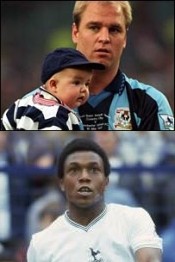 As well as functioning as a type of “careers service” for footballers, the PFA offers financial support for players looking to get into new fields. In an article entitled “Our debt to the PFA“, David Busst (ex Coventry City), Danny Thomas (ex Tottenham Hotspur) and Ronnie Wright (ex Preston North End) voice their appreciation for the succour offered by the PFA in their times of crisis. For the first two, it was a matter of “what to do after a career in football?”, after both had their playing days brought to an end by injuries, aged 29 and 26 respectively. In both cases, the PFA approached the player (and not vice versa), and paid for the players to attend courses in order to build a new career. Busst became a manager following a sports therapy course at Solihull College, and had each and every one of his UEFA badges funded by the PFA. Thomas, meanwhile, opted for a degree in physiotherapy, following consultation with the association, and is now a successful and respected physio with his own practice.
Wright‘s case is different in that his career as a footballer never took off — despite being one of the most exciting youngsters at his age level, he was released by Preston at the age of 20 and decided to pursue a career elsewhere. Wright recounts that the PFA hammered home the importance of obtaining his school qualifications — GCSE’s and A-Levels — and paid his way through an excellent college in order to do so. When Preston let him go, the PFA then collaborated with Wright to find him a suitable university course — he studied for a diploma in genetics at the University of Manchester — and paid for both his fees and his accommodation.
Interestingly enough, Busst asserts that in his experience with the PFA, player status is of little relevance. He tells the story of two of his players at little-known Solihull Borough, who both desperately needed operations after retiring from the game. The PFA stepped in to fund the operations and helped them to rebuild their life.
Many current professionals are being helped to plan for life after football by the PFA, including Accrington Stanley’s two-time 2UP Player of the Month Andrew Proctor, who is attending the PFA chartered physiotherapist course at Salford University part-time.
.
Financial management/pensions
 The life of a footballer (outside the Premiership) can be littered with financial insecurity, or at least unpredictability, particularly when one’s career is in its infancy. A typical footballer’s career will last around 15 years, with only 5-10 of those spent at the player’s peak level.
However, the 2004 Finance Act, introduced by the Labour government, removed the special exemption given to sportsmen to enable them to receive their pension before the age of 50.
The PFA, the Trustees of the Players’ Non-Contributory Cash Benefit Scheme (CBS) and the Football League Players’ Retirement Income Scheme, have linked up with respected financiers Butlers Wharf Independent Advisers to provide footballers a streamlined and reliable source of financial counseling. The PFA now employs 22 qualified financial advisers, and has conducted, together with Butlers Wharf, some 350 club visits over the last year a half, as well as contacting more than 1000 former players.
The PFA and Butlers Wharf deal with Pensions, Investment, Insurance, Mortgages, Loans, Tax and Relocation to offer footballers a comprehensive service such as they have never enjoyed before.
.
Education/charities
The PFA is not an orthodox union in that only a tiny percentage of its funds come directly from members’ subscriptions. Thanks to a healthy income — largely due to the money received from TV subscription money, which was itself increased after the union’s industrial action, supported by 100% of members, back in 2001 — the PFA is able to offer financial assistance to a number of good causes related to sport and football.
 As we have seen above, the PFA continually stresses the importance of footballers’ education, both in terms of general well-roundedness and in order to provide unsuccessful players with a platform with which to relaunch their lives in the world of work. In this vein, the PFA and its officers consistently help young players combine improvement on the pitch with development off it, sponsoring college attendance and purchasing books for club academies.
  The PFA is one of the leading supporters of the excellent Kick into Reading scheme (a subset of the National Literacy Trust), through which footballers visit local schools and read stories to students, and was influential in securing a £500 book grant for Fulham FC’s academy in recent years. In this way, the PFA helps footballers and fans to improve “Reading the game“.
 The issue of testicular and prostate cancer amongst boys and men has been really brought to the attention of the public over the last 5 years, in no small part thanks to the Keep Your Eye on the Ball campaign run by the PFA. Keep Your Eye on the Ball was set up after a number of high-profile players, including Milwall’s Neil Harris, for whom £60,000 was raised by Milwall fans, Alan Stubbs and Jason Cundy, were diagnosed with testicular cancer a few years back. KYEOTB now dedicates itself to sensibilizing children to the risks of testicular cancer — the organisation have given talks at hundreds of schools, and supplies posters, adverts and leaflets to over 80 Football Clubs and County FA’s — as well as to raising money for sufferers.
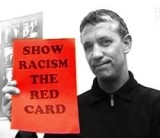 The PFA is a staunch supporter of the Kick It Out and Show Racism the Red Card campaigns, which have had enormous success across Great Britain. The PFA has also provided support and coverage of Football Unites, Racism Divides, as well as carrying out surveys to try to get to the bottom of institutionalized racism at clubs and national organizations.
Vast amounts of clubs have set up successful community services in recent years, with particularly notable schemes coming from the likes of Middlesbrough and Tottenham. The PFA has been a vehement backer of community action on the part of players and ex-players, with Gordon Taylor pointing to the fact that over 10,000 visits to hospitals and schools are made by players every single year.
Other charities supported by the PFA include OCD-UK, The Prince’s Trust, Opportunity International UK and Kids Taskforce.
.
The Verdict
 Throughout this article I have sought to demonstrate that Stan Collymore’s complaints regarding the inactivity of the PFA could hardly be further from the truth. Whilst I sympathise with Stan as a fellow sufferer of clinical depression, it is my belief, and this is I think borne out by the facts, that English footballers are exceptionally lucky to enjoy the backing of an institution that can proudly claim to be amongst the best of its kind in the world. In examining the systems in place in Spain, France and Italy, I wish not to detract from these countries, but to put in context the excellent work carried out by the PFA and its officers.
The PFA and Gordon Taylor should be congratulated on the integrity, sincerity and social consciousness that they have exhibited in helping thousands of footballers, and disadvantaged children, over the last few years.
N.B. The present is a good time to celebrate the League Football Education association, since today marks the beginning of National Apprenticeship Week in the UK. Do check out their website at www.lfe.org.uk.
Add Sportslens to your Google News Feed!


